
EG7060 Mental Wealth: Professional Life Assignment Brief 2026 | UEL
Looking for Plagiarism free Answers for your US, UK, Singapore college/ university Assignments.
| University | University of East London (UOEL) |
| Subject | EG7060 Mental Wealth: Professional Life |
EG7060 Assignment Brief
Assessment for Module EG7060
You will deal with ambiguous and uncertain situations and information in the real world. You must manage, mitigate, and justify assumptions according to your best professional understanding. You must deliver to your client, The East London Innovation and Research Theme Park (ELIRTP), a professional report that addresses their needs and presents your suggested outline design/action plan, along with ways to implement it. It is important to remember that you are acting as a professional consultant and must put forward the solution you believe to be most appropriate, recognising that you have a professional duty to society that may conflict with your client’s needs.
This assignment will expect you to work closely with your student team to collaborate and achieve the desired module outcomes. It will also involve you undertaking detailed individual research and exposition. There are three parts to the assessment of this module, and they are included in this one assignment in three main parts:
- Collaborative/ Group feasibility presentation 20%
- Group research and design, with individual student section – 60% weighting (50% individual section /10% Group collaboration)
- Individual mental wealth reflective Log – 20% weighting
Parts (1) and (2) will cover the technical issues, and the reflective log (3) will demonstrate your professional ability to manage yourself and the group work.
If you encounter difficulties with your group or individual work, you must explain and justify them in your reflective log in the correct format. You will be assessed on how well you have managed change during this work. See ‘Part C: Reflective log and summary report’ for details below.
Assessment Overview
The following is the assessment structure for the module:
|
Part |
Assignment Element |
Content |
Submission & Assessment |
Weighting |
Format |
|
A |
Collaborative group feasibility presentation |
Videoed oral group presentation (each member should contribute to the oral presentation) |
Submitted by the end of week 6 on 06/03/2026 & assessed by peers and tutors during week 6 tutorials on 06/03/2026. |
20% |
8-minute Group video – uploaded by Week 6 to MS Teams. Assessed by Group tutor & peers. |
|
B |
Technical Report, by Group with individual named sections – coordinated by Group Leader |
A specific area of research to cover the client’s requirements, written by an individual group member, but with clear collaborative links between sections |
Online Submission via Moodle on Tuesday, 05/05/2026, as a group assignment, combined and submitted by the group leader |
50% Individual Section + 10% Group Collaboration |
3600 words per individual student
Assessed by the group tutor |
|
C |
Individual Student Reflective Report |
Weekly Log outlining the Mental Wealth Skills you have developed in your group and individual work. |
Online submission through Moodle on Tuesday, 12/05/2026, by individual students |
20% |
1500 words
Assessed by the group tutor |
All students must attend all class sessions, including the practice presentations.
Management and Monitoring Progress
The assignment will involve five team members, and you will be responsible for one task each, but ultimately, the whole project must be joined up. Preparing students to engage with a variety of people in the workplace. Working with close friends in the industry is not always possible, but working as a team and meeting deadlines on time is paramount. The group should meet weekly to plan work and report on progress. Keep a log of all the challenges you face as a group and as individuals, and reflect on them in your reflective log.
Project Brief
Sustainable Energy Solution for The East London Innovation and Research Theme Park (ELIRTP): Analysis and design.
The world is already feeling the effects of the climate crisis and needs to ensure that we are resilient to the future. It is important to adopt environmentally friendly, sustainable energy technologies in the future to reduce carbon emissions. This means that all new energy systems need to be designed to produce zero carbon emissions by 2030 to protect the planet from the climate crisis, leave a better world for the next generation, and so on.
The East London Innovation and Research Theme Park (ELIRTP) is a newly established science, engineering, and digital-technology district located near the Thames Gateway. The park spans 148 hectares and has been designated as a strategic regional hub for advanced manufacturing, robotics development, renewable-energy research, simulation laboratories, immersive experience centres, and industrial prototyping facilities.
Over the past three years, ELIRTP has experienced rapid economic and infrastructural growth, attracting over 160 start-ups, 18 mid-sized companies, and four major anchor tenants, including an autonomous vehicle test centre and a robotics fabrication plant. This growth has led to a substantial rise in electricity consumption, thermal energy needs, and peak-load fluctuations, putting significant pressure on the existing grid-supplied energy infrastructure.
Your team is an energy consultancy company. The ELIRTP has requested that you conduct a feasibility analysis and outline design for a sustainable energy solution to meet their net-zero carbon commitment by 2030. Based on your analysis, you must recommend the best sustainable/alternate/ green/zero-carbon energy solution, and then propose a design with the required calculations and recommendations.
Project Requirements
You need to address the following when you recommend and design the Sustainable Energy Solution for ELIRTP:
- Sustainable approach to design that will provide long-term benefits to ELIRTP and the local community.
- An integrated infrastructure strategy for the current and future infrastructure of the ELIRTP, including planning constraints.
- A strong commercial strategy and evidence to show that the new solution will be financially viable and meet the legal requirements and standards.
- Demonstrate that the new sustainable energy solution meets the needs of local and regional stakeholders and environmental planning obligations.
- A clear procurement strategy, safe construction, commissioning, and testing plans.
- A high-quality development plan showcasing innovation and providing value for money for the client and stakeholders.
- Transparent Procurement and supply chain strategy
At present, the site relies heavily on conventional grid electricity imported from the National Grid through two 11 kV substations. Preliminary energy audits have identified:
- Continuous annual demand growth of 3.4%
- Peak-hour loads exceeding 14.6 MW
- High operational carbon emissions
- Vulnerability to regional supply interruptions
- Limited on-site generation capacity
- Inefficiency during seasonal variations
In alignment with UK Net Zero 2050 legislation, London’s Climate Action Plan, and local authority decarbonisation strategies, the ELIRTP governing board has committed to transforming the entire site into a net-zero-carbon district by 2030.
- Integrating multiple renewable energy
- Reducing reliance on the national grid
- Supporting advanced energy-management technologies
- Strengthening energy efficiency & security
- Enabling flexible demand response
- Maintaining energy availability for emergency
- Lowering operational carbon emissions
- Ensuring long-term affordability and reducing long-term operational expenditure
- Offering Scalability for future expansions of the park
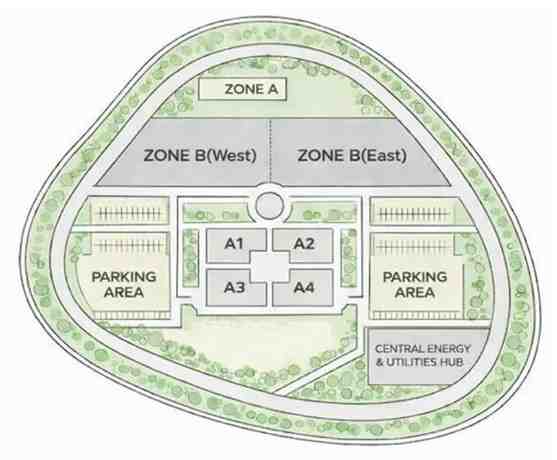
Figure 1: The East London Innovation and Research Theme Park (ELIRTP).
In Part B of this assignment, it can be broken down in more detail into five (I—V) sections.
Part A – Collaborative Group Feasibility Presentation
Collaborative Group Feasibility Presentation – Due Week 6
During weeks 2—5, you will undertake a feasibility study by analysing the energy consumption data and some practice presentations during your tutorial sessions on linked topics. The Group Progress Presentation to be graded (in Week 6) must cover the following areas:
An outline feasibility study:
Compare different alternative energy solutions and conclude the best solution with justifications. Some available options, but not limited to, could be as follows:
- Solar PV power generation system
- Hydrogen fuel cell power generation system
- Sustainable Modular Wind Turbines
- Hybrid power generation of any combination
The proposed scheme must be supported by an overall plan, the artist’s impression of structures, and required calculations.
Within your presentation, you must also address the project requirements in the Project Brief. Additionally, identify key design interventions to ensure your company’s proposed alternative energy system is resilient and sustainable in the long term.
You will be provided with the energy usage data from ELIRTP, and some useful links are given in Appendix A. Please ensure this information is researched thoroughly, but please DO NOT plagiarise.
Format for Assessment
Pre-record and upload the videoed PowerPoint presentation using MS Stream to your MS Team Student Private Channel in MP4 video format, noting it as the FINAL COPY FOR ASSESSMENT. The Group must ensure that the video plays appropriately from this location and is no longer than 8 minutes. The slide notes section should include a summary of the main points of each slide and references used.
Part B Technical Report
Technical written report, written in individual named sections.
The ELIRTP has now considered your feasibility presentation and wishes to proceed with the proposed sustainable energy solution for their site. Using this as a basis, your group must provide a brief, detailed report, as outlined below.
The group leader must allocate work roles and manage and monitor progress across the five sections listed below. Each section is expected to be supported by charts, data, and sketches, as required.
Section I – Design Issues (Student 1)
- Initial design considerations and constraints for constructing and commissioning a sustainable energy system at ELIRTP.
- Devise a program in the form of a Gantt chart, including a plan of works, for the project’s consultation and design, clearly showing all-time constraints before construction.
- Analyse and provide financial data supporting and justifying cost implications at the design stage only for the project.
- A detailed report supporting the process of addressing public concerns.
Section II – Project Management (Student 2)
- An overview of the political, economic, social, technological, legal, and environmental issues affecting the sustainable energy system construction & operation of the project.
- Identify the stakeholders and develop a stakeholder management plan for the project.
- Identify the project’s risks and develop a plan to manage them effectively for the project’s success and your company’s success.
- Present an economic evaluation of the financing of the infrastructure and the likely costs.
Section III – Process Planning (Student 3)
- The process planning, methods, and logistics for storage, collection, transport, handling, recycling, disposal, and monitoring waste materials.
- Discuss Health and Safety obligations and provide detailed method statements supported with pictorials for constructing the significant elements of the works; these must be project-specific.
- Discuss how sustainable processes are employed during the construction process.
- Work breakdown structure (WBS) of the planned construction and commissioning of the Sustainable Energy Solution.
Section IV – Detailed design of the system (Student 4)
- An outline program (Gantt chart user-friendly) for the work for the key elements (manually or software-based), identifying critical activities & resource smoothing opportunities.
- A detailed design and modelling of key subsystems of the Sustainable Energy Solution.
- Drawings, sketches, and 3D models
- Discuss different technologies to monitor the sustainable energy system health and performance so that this information can be used to improve future projects.
Section V – Procurement Methods & Supply Chain Matters (Student 5)
Select and justify the best procurement method for this project regarding contractual obligations. Explore implementing an innovative, collaborative procurement approach to de-risk the construction.
Analyse the structure of the UK economy regarding procurement methods and supply chain matters, and demonstrate a critical awareness of the industry’s economic role.
Describe how the Quality Assurance System ensures the best practice in managing the development. Propose practical measures that can be utilised by contractors to ensure that the client achieves a project that is ‘fit for purpose’ and the best value for money.
Advise the client on the following: –
- What are the different “Dispute Resolution” methods if disputes arise?
- What is the role of a professional (e.g., engineer, architect, project manager, etc.) as an expert witness?
Submission Details for Part B – Technical Report
The Group Technical Report must be submitted by the group leader, containing all the individual sections as a single complete e-document in PDF or Word format, via the Turnitin Link on the EG7060 Moodle site by Tuesday, 5 May 2026. The e-report should clearly identify the author of each section and be a seamless piece of work.
It is highly recommended that you have your English checked by the UEL ‘MyFeedback’ Service, which is free for students. You need to submit your work at least a week before the official submission date, or earlier, to be sure of a response in time.
The written report is to conform to the following standards:
- Arial font must be used. The main text must be in 12-point font and have a line spacing of 1.5. Larger fonts may be used for section headings.
- Margins must be 40mm left (binding margin) other three margins must be 20mm.
- The main text must be justified to both margins.
- Each Section must be 3600 words + appendices (charts, diagrams, sketches, etc.).
Part C – Reflective Report
Introduction to Mental Wealth Competencies
The Mental Wealth Competencies, listed in Appendix D, are a way to reflect on how your professional graduate employability skills; it is how you act and react to situations and what ‘softer’ skills you are developing throughout your working life in general and this assignment. UEL has developed a framework of these competencies, which is available here under eight headings:
- Digital Proficiency
- Social & Emotional Intelligence
- Physical Intelligence
- Cultural Intelligence
- Cognitive Intelligence
- Industry Connections
- Community Connections & UEL Give-Back
- Enterprise & Entrepreneurship
More detailed information can be found on the UEL SharePoint about Mental Wealth here: Mental Wealth competencies (sharepoint.com). Over the period of this module, you are asked to produce a personal reflective written account based on the Mental Wealth Competencies experienced in this module:
- East London Edge Programme ‘Developing Industry Connections’ LinkedIn Course
- Sustainable energy solution to meet the East London Innovation and Research Theme Park (ELIRTP) ’s net zero carbon commitment by 2030: Analysis and design Group Project Work
East London Edge Programme ‘Developing Industry Connections’
This is a specifically curated set of LinkedIn Learning training sessions to improve your business acumen and industrial networking connections. When you complete this course, you will be able to download certificates from LinkedIn to verify your completion, which you can then add as a screen dump appended to your Part C report as evidence.
Details on how to access LinkedIn Learning can be found here.
The breakdown of the sessions is as follows:
- Networking
- Commercial Awareness
- Preparing for Interviews
- Professional Etiquette
After completing each section, compare and match with the Mental Wealth Competencies provided in Appendix D and select which ones you have covered in this LinkedIn course. You need to write a ‘Description’ of what was covered in the course (i.e., context/emotions); then ‘Analyse’ what you have learned in terms of the outcomes that were set and whether you achieved them (i.e., were the outcomes beneficial or not? And why? What else did you learn?); then finally consider an ‘Action Plan’ of what future improvements you need to make to improve this competency.
You can use the Table in Appendix D as a direct template to input your written work. It is anticipated that you will have covered content for the following Mental Wealth Criteria through this LinkedIn Course:
- Industry Connections
- Community Connections & UEL Give-Back
- Enterprise & Entrepreneurship
Accessing the LinkedIn Course –
This course is part of the East London Edge Programme, ‘Developing Industry Connections.’ To access it, log on to the UEL Career Zone here and navigate the Learning Pathway entitled ‘Developing Industry Connections.’ See the screen dumps in Figure 2 below.
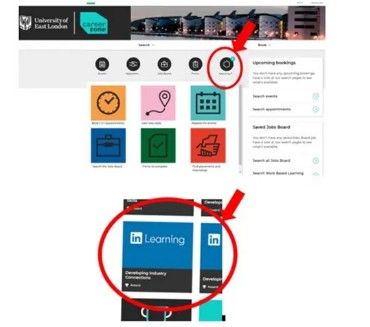
Figure 2: Accessing the LinkedIn ‘Developing Industry Connection’
Sustainable Energy Solution to meet the ELIRTP’s net-zero carbon commitment by 2030: Analysis and design Group Project work
This part will form a final reflective account of working as a group on the construction and commissioning of the sustainable energy solution. It should specifically cover how the group operated to produce the Mid-Term Group Presentation and the Final Group Technical Report. It should be structured around the Mental Wealth Competencies as given in Appendix D, and it is anticipated that the following ones will be demonstrated in this Group work:
- Digital Proficiency
- Social & Emotional Intelligence
- Physical Intelligence
- Cultural Intelligence
- Cognitive Intelligence
For more information, you may wish to use the Table in Appendix D as a direct template to input your written work. You may also want to consult the UEL Mental Wealth Framework document for background reading.
Submission Details for Part C- Reflective Report
This should be submitted to the appropriate Turnitin Link provided on Moodle EG7060 for Part C by Tuesday, 12 May 2026. The written work should be in good English and conform to the following standards:
- Arial font must be used. The main text must be in 12-point font and have a line spacing of 1.5. Larger fonts may be used for section headings.
- Margins must be 40mm left (binding margin) other three margins must be 20mm.
- The main text must be justified to both margins.
- The word count for Part C should be 1500 words in total (e.g., @500 words for Part
5.2 ‘Developing Industry Connections’, and @1000 words for Part 5.3 the Group Project work)
It is highly recommended that you have your English checked by the UEL ‘MyFeedback’ Service, which is free for students. You need to submit your work at least two weeks before the official submission date, or earlier, to be sure of a response in time.
Flexible Rates Compatible With Everyone’s Budget
Hire a Professional Essay & Assignment Writer for completing your Academic Assessments
Looking for Plagiarism free Answers for your US, UK, Singapore college/ university Assignments.